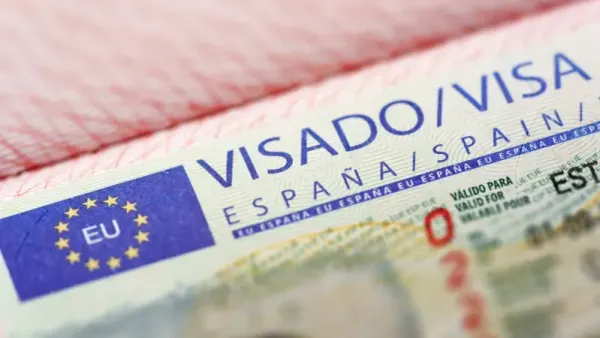
Spain Digital Nomad Visa 2026 — The Complete Guide


Last verified: May 2026 | Author: Dean
Spain has become one of the most sought-after destinations for digital nomads and remote workers worldwide — and for good reason. A thriving expat community, world-class cities, excellent infrastructure, and now a dedicated legal pathway to live and work here remotely. Having lived in Barcelona myself and navigated the Spanish residency system first-hand, I can tell you that getting it right from the start makes an enormous difference.
This guide covers everything you need to know about Spain's Digital Nomad Visa in 2026 — who qualifies, what it costs, exactly how to apply, and the mistakes that get applications rejected. Many nomads are using our Spain Digital Nomad Visa DIY Pack to apply themselves
What Is the Spain Digital Nomad Visa?
The Spain Digital Nomad Visa — officially known as the Visado de Teletrabajador de Carácter Internacional — was introduced under Spain's 2023 Startup Act. It gives non-EU nationals the legal right to live in Spain while working remotely for companies or clients based outside the country.
It is not a tourist visa with a loophole. It is a proper legal residency pathway, and it comes with significant benefits — including access to Spain's favourable Beckham Law tax regime, a path to permanent residency after five years, and eventually Spanish citizenship.
Who it is for:
- Remote employees working for a foreign company
- Freelancers and independent contractors with non-Spanish clients
- Entrepreneurs running an online business with clients outside Spain
Who it is NOT for:
- People who want to work for a Spanish company
- People whose primary clients or employers are based in Spain
2026 Income Requirements
The income threshold is tied to Spain's Minimum Interprofessional Salary (SMI), which updates every January. Following Royal Decree 126/2026, the SMI increased by 3.1% to €1,221 per month, which has automatically raised the DNV income threshold.
2026 Income Thresholds:
| Applicant | Monthly Minimum | Annual Minimum |
|---|---|---|
| Single applicant | €2,849 | €34,188 |
| + Spouse / partner | +€1,069 | additional |
| + Each child | +€357 | additional |
| Example: couple + 1 child | €4,275 | €51,300 |
Important: This is gross income before Spanish tax deductions. Your bank statements, payslips, and employment contracts must all clearly reflect this level of consistent income.
Pro tip from immigration lawyers: Aim to show at least €3,000/month as a single applicant. Consulates have discretion and showing a buffer above the minimum significantly reduces the risk of rejection.
Am I Eligible?
Before you start gathering documents, confirm you meet all of these requirements:
✅ Nationality: Non-EU, non-EEA national (EU citizens already have the right to live in Spain)
✅ Employment: Working remotely for a company or clients based outside Spain
✅ Income: Earning at least €2,849/month gross (2026 figure)
✅ Professional experience: University degree OR minimum 3 years of documented professional experience in your field
✅ Clean criminal record: No criminal convictions in Spain or any country where you have lived in the last 2 years
✅ Health insurance: Private health insurance covering you in Spain (must meet Spanish Tax Agency requirements)
✅ No illegal presence: You must not be in Spain unlawfully at the time of application
The Beckham Law — Your Tax Advantage
This is one of the most compelling reasons to choose Spain's DNV over other European visa options and it is often overlooked.
The Beckham Law (formally the Special Expatriate Tax Regime) allows qualifying DNV holders who have not been Spanish tax residents in the previous 5 years to pay a flat 24% income tax rate on Spanish-sourced income up to €600,000 — instead of Spain's standard progressive rates which reach up to 47%.
You benefit from this regime for the year of your arrival plus five additional years — six years total.
For a remote worker earning €60,000 a year, the difference between paying 24% flat versus Spain's standard progressive rate can amount to thousands of euros annually. This needs to be applied for separately — it is not automatic.
How to Apply — Step by Step
There are two routes depending on where you are when you apply.
Route 1: Apply From Your Home Country (Via Consulate)
This is the standard route for most applicants. You apply at a Spanish consulate in the country where you legally reside.
Step 1 — Check your consulate's specific requirements Every Spanish consulate has slightly different procedures and appointment booking systems. Check the website of the specific consulate in your country before doing anything else. Do not assume all consulates operate identically — they do not.
Step 2 — Gather your documents This is where most applications succeed or fail. Take your time here.
Required documents for all applicants:
- National Visa Application Form (completed and signed)
- Valid passport (must be valid for at least 3 months beyond your visa expiry)
- Passport-size photographs (biometric, white background)
- Proof of income (bank statements for 3–6 months + payslips or client contracts)
- Employment contract or client contracts showing remote work arrangement
- Proof of professional experience (degree certificate OR 3 years' work history documentation)
- Criminal background certificate from every country you have lived in for the last 2 years — apostilled and translated into Spanish by a sworn translator
- Private health insurance policy covering Spain
- Proof of accommodation in Spain (rental contract or property deed)
Step 3 — Book your consulate appointment Most Spanish consulates require appointments booked by email. Response times vary significantly. In busy consulates such as London, New York, and Miami, appointment availability can be 4–8 weeks out. Book as early as possible.
Step 4 — Attend your appointment and pay the fee You will attend in person, submit your documents, and pay the visa fee. The current fee is €73.26 (tasa 790-038). This fee is non-refundable regardless of outcome.
Your passport will be retained by the consulate during processing. Factor this into your travel plans.
Step 5 — Wait for a decision Processing time from consulate: typically 4–8 weeks, though this varies. You will be notified by email or post.
If approved, you receive a one-year entry visa.
Step 6 — Arrive in Spain and register Within 30 days of arriving in Spain you must:
- Register with local police and obtain your TIE (Tarjeta de Identidad de Extranjero — Foreigner Identity Card)
- Complete empadronamiento — registering your address at the local town hall
- Ensure your private health insurance is active
- Open a Spanish bank account
Route 2: Apply From Within Spain
If you are already legally present in Spain — including on a tourist Schengen visa — you can apply directly for a 3-year residence permit through the Unidad de Grandes Empresas (UGE-CE), the specialist digital nomad visa office.
Key differences from the consulate route:
- You apply online through the UGE-CE portal
- If approved you receive a 3-year residence permit directly (rather than a 1-year visa)
- This first year does count towards your long-term residency timeline
- Processing time is typically 20–45 business days
Important 2026 update: The UGE-CE was restructured in early 2026 with a specialist senior team and a crackdown on fraudulent documentation. Scrutiny has increased significantly. Ensure every document is genuine, consistent, and correctly apostilled.
Common Reasons for Rejection
Immigration lawyers consistently report the same reasons applications fail. Avoid these:
1. Income figures that don't match across documents Your bank statements, payslips, and tax returns must all tell the same story. If your bank deposits don't reflect your declared income, you will be rejected.
2. Outdated criminal record certificate Most consulates require this document to be less than 3–6 months old at the time of filing. Apply for it last, not first.
3. Wrong consulate jurisdiction Spanish consulates are strict about jurisdiction. You must apply at the consulate for the area where you legally reside. Applying at a different consulate — even in the same country — can result in rejection.
4. Apostille errors Every foreign document must be apostilled for use in Spain. A missing or incorrectly obtained apostille is grounds for rejection. If in doubt, get a sworn translator to verify.
5. Health insurance that doesn't meet requirements Not all international health insurance policies are accepted. Your policy must meet Spain's specific requirements — check with your provider before purchasing.
6. Insufficient proof of remote work A payslip alone is not enough. You need a formal employment contract or client contracts that explicitly confirm your work is remote and that your employer or clients are based outside Spain.
Costs — What to Budget
| Item | Estimated Cost |
|---|---|
| Visa application fee | €73.26 |
| Sworn translation of documents | €200–€500 |
| Apostille fees | €100–€200 |
| Private health insurance (annual) | €500–€1,500 |
| Accommodation deposit (1 month) | €800–€2,000 (Barcelona) |
| Immigration lawyer (optional but recommended) | €800–€2,000 |
| Total (DIY, no lawyer) | ~€1,000–€2,500 |
| Total (with lawyer) | ~€2,000–€4,500 |
Timeline — How Long Does the Whole Process Take?
From deciding to apply to holding your TIE card in Barcelona:
- Document gathering: 2–4 weeks
- Consulate appointment wait: 2–8 weeks
- Consulate processing: 4–8 weeks
- Arrival + TIE registration: 2–4 weeks
Total realistic timeline: 3–6 months
Plan accordingly. If you want to be in Spain by a specific date, work backwards from that date and start the process well in advance.
After Approval — Your Residency Pathway
The Spain DNV is not just a visa — it is the beginning of a long-term residency pathway.
| Stage | Timeline |
|---|---|
| Initial visa (consulate route) | 1 year |
| First renewal (residence permit) | +2 years |
| Second renewal | +2 years |
| Permanent residency eligibility | After 5 years |
| Spanish citizenship eligibility | After 10 years (2 years for Latin American nationals) |
Each renewal requires you to demonstrate you are still meeting the income requirements and have been genuinely residing in Spain — broadly interpreted as spending at least 6 months per year in the country.
Do I Need an Immigration Lawyer?
Honest answer: not necessarily, but the risk of doing it yourself is real. The rejection rate for DIY applications is significantly higher than for professionally managed ones.
Go DIY if:
- Your situation is straightforward (employed by a foreign company, clear income, no dependants)
- You have time to research thoroughly and gather documents carefully
- You are comfortable dealing with Spanish bureaucracy
Use a lawyer if:
- You are a freelancer or have complex income sources
- You have lived in multiple countries (more documents to apostille)
- You are applying with dependants
- You cannot afford a rejection and the months it would cost to reapply
Two Ways VisaWise Can Help
Do it yourself — our Spain DNV Application Pack (€29) includes every document template, a step-by-step checklist, and a complete guide to the apostille process. Everything you need to submit a clean application first time.
Work with a verified lawyer — if you'd prefer professional support, we match you with verified Spain immigration lawyers who specialise in DNV applications. Free introduction, no obligation. [Get matched with a Spain DNV lawyer ]
Frequently Asked Questions
Can I apply if I am a freelancer? Yes. Freelancers can apply but the documentation requirements are different — you will need client contracts, invoices, and potentially bank statements showing consistent income over 6+ months rather than payslips.
Can I bring my family? Yes. Spouses, registered partners, dependent children, and dependent ascendants can be included in the initial application or added later through family reunification. Each adds to the income requirement.
Is there a minimum stay requirement? No minimum stay to obtain the initial visa, but to renew your residence permit you must demonstrate genuine residence — broadly 6 months per year in Spain.
Can UK citizens apply? Yes. British citizens are explicitly eligible for Spain's DNV following Brexit. The process is the same as for other non-EU nationals. UK criminal record certificates (DBS) are accepted with apostille.
What about US citizens? Yes. US citizens can apply. The main difference is that Americans require an FBI federal background check (not just state-level) with apostille. Also note that the US–Spain double taxation agreement means the US retains the right to tax US citizens on worldwide income regardless of Spanish residency — consult a tax adviser.
Can I convert from a tourist visa to a DNV inside Spain? If you are legally present in Spain — including on a Schengen tourist visa — you can apply directly for the 3-year residence permit through the UGE-CE without leaving the country.
What happened to Spain's Golden Visa? Spain's real estate Golden Visa was eliminated in 2025 and is no longer available. The DNV is now the primary route for non-investor remote workers. The Non-Lucrative Visa (NLV) remains available for those with passive income or savings.
The Bottom Line
Spain's Digital Nomad Visa is one of the best legal pathways available for remote workers wanting to live in Europe. The income threshold is competitive, the Beckham Law tax benefit is genuinely valuable, and Barcelona and Madrid consistently rank among the world's best cities for remote work.
The application process is manageable with proper preparation. The mistakes that cause rejections are predictable and avoidable. Whether you do it yourself with the right guidance or work with a specialist lawyer, the path is clear.
If you are earning over €2,849/month gross from remote work and have been dreaming about living in Spain — 2026 is a very good year to make it happen.
Last verified against official sources: May 2026. Visa requirements and income thresholds are subject to change. Always verify current requirements at exteriores.gob.es before submitting your application.
This guide is for informational purposes only and does not constitute legal advice. For complex situations, consult a qualified Spanish immigration lawyer.